Types of Silk Sarees: A Complete Guide to India's Most Elegant Weaves
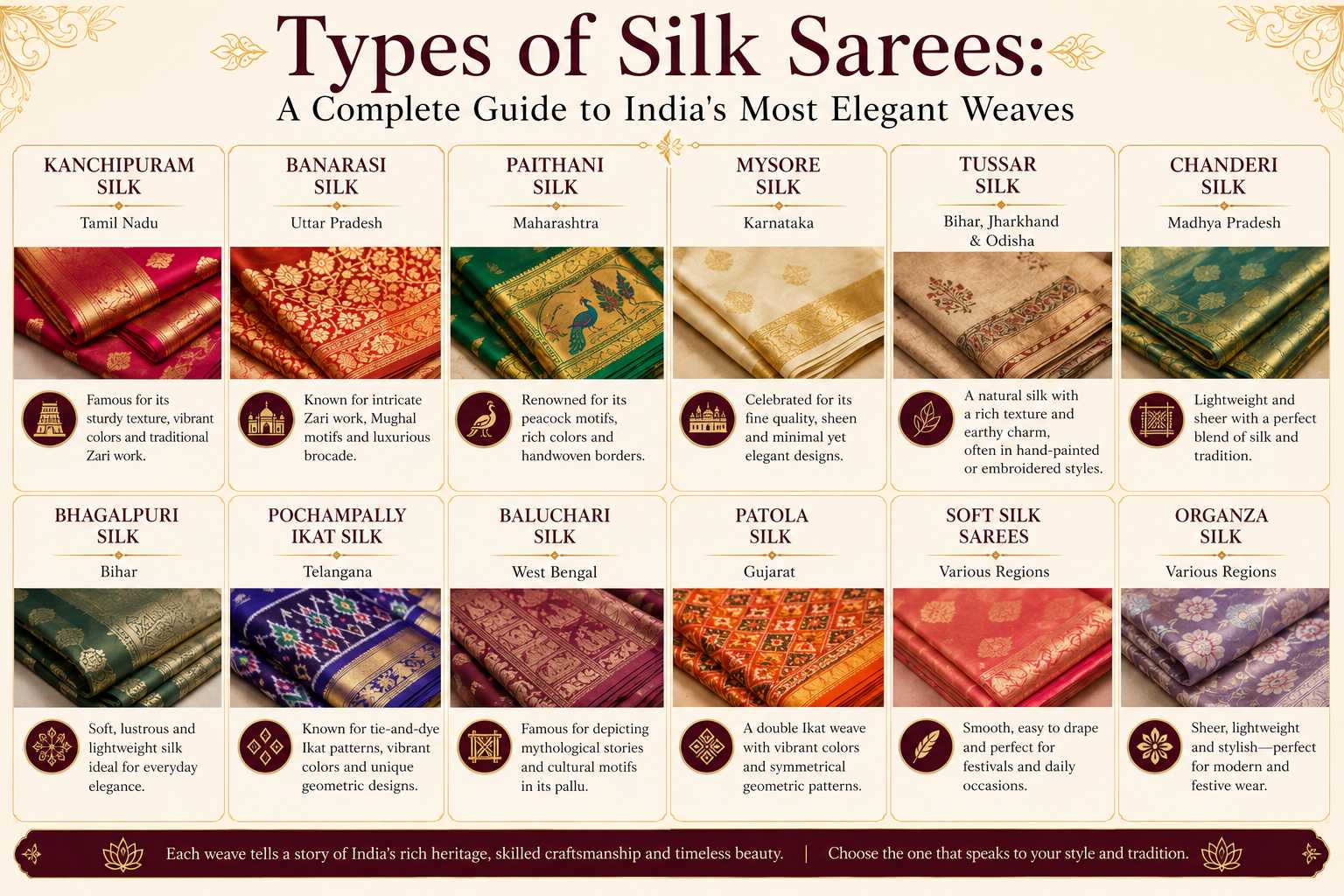
Types of Silk Sarees: A Complete Guide to India's Most Elegant Weaves
Silk sarees are among the most treasured garments in Indian fashion and culture. Known for their luxurious texture, rich colors, and intricate craftsmanship, silk sarees have been an integral part of weddings, festivals, and special occasions for centuries. Every region of India has developed its own unique silk weaving tradition, resulting in a diverse range of beautiful sarees.
If you're looking to buy a silk saree, understanding the different types can help you choose the perfect one for your style and occasion. Here is a complete guide to the most popular silk sarees in India.
1. Kanchipuram Silk Sarees
Kanchipuram silk sarees, also known as Kanjeevaram sarees, originate from Tamil Nadu and are considered among the finest silk sarees in India. These sarees are renowned for their rich silk fabric, heavy gold zari work, and traditional motifs inspired by temples, peacocks, and nature.
Key Features:
- Pure mulberry silk
- Rich zari borders
- Durable and long-lasting
- Popular for weddings and bridal wear
Kanchipuram sarees are often passed down through generations as cherished heirlooms.
2. Banarasi Silk Sarees
Originating from Varanasi, Banarasi silk sarees are famous for their intricate brocade work and Mughal-inspired designs. They are one of the most preferred choices for bridal wear across India.
Key Features:
- Fine silk weaving
- Floral and paisley motifs
- Heavy gold and silver zari work
- Luxurious appearance
Banarasi sarees symbolize elegance and royal heritage.
3. Mysore Silk Sarees
Mysore silk sarees are known for their simplicity, smooth texture, and understated elegance. Produced in Karnataka, these sarees are woven using high-quality silk and pure zari.
Key Features:
- Lightweight and comfortable
- Soft silk texture
- Minimalistic designs
- Ideal for formal occasions
Their timeless appeal makes them suitable for both traditional and contemporary styling.
4. Paithani Silk Sarees
Paithani sarees originate from Maharashtra and are recognized for their vibrant colors and exquisite handwoven motifs. Traditional designs often feature peacocks, lotuses, and parrots.
Key Features:
- Handwoven artistry
- Rich pallu designs
- Distinctive borders
- Bright color combinations
Paithani sarees are highly valued for their craftsmanship and cultural significance.
5. Tussar Silk Sarees
Tussar silk, also known as Kosa silk, is prized for its natural golden sheen and textured appearance. These sarees are popular among women who prefer a sophisticated and earthy look.
Key Features:
- Natural texture
- Lightweight fabric
- Unique golden glow
- Suitable for casual and festive wear
Tussar silk offers a perfect blend of elegance and comfort.
6. Chanderi Silk Sarees
Chanderi sarees come from Madhya Pradesh and are known for their lightweight feel and delicate weaving. They combine silk and cotton to create a graceful drape.
Key Features:
- Sheer texture
- Lightweight fabric
- Elegant motifs
- Perfect for summer occasions
Chanderi sarees are ideal for women who appreciate subtle sophistication.
7. Patola Silk Sarees
Patola sarees from Gujarat are celebrated for their complex double ikat weaving technique. Creating a Patola saree requires exceptional skill and can take several months to complete.
Key Features:
- Double ikat weaving
- Geometric patterns
- Vibrant colors
- Highly exclusive craftsmanship
These sarees are considered among the most luxurious handwoven textiles in India.
8. Uppada Silk Sarees
Uppada silk sarees originate from Andhra Pradesh and are admired for their lightweight texture and intricate zari designs.
Key Features:
- Soft and airy fabric
- Detailed handwoven patterns
- Elegant appearance
- Suitable for weddings and celebrations
Their comfort and beauty make them increasingly popular among modern women.
9. Baluchari Silk Sarees
Baluchari sarees from West Bengal are known for storytelling motifs woven into the pallu and borders. These artistic designs often depict scenes from mythology and history.
Key Features:
- Rich cultural themes
- Intricate weaving
- Distinctive artistic patterns
- Traditional elegance
Baluchari sarees are perfect for those who appreciate heritage craftsmanship.
10. Organza Silk Sarees
Organza silk sarees have become a modern fashion favorite due to their lightweight structure and contemporary appeal.
Key Features:
- Transparent texture
- Floral embroidery
- Elegant drape
- Suitable for parties and receptions
They offer a stylish alternative to traditional heavy silk sarees.
How to Choose the Right Silk Saree
When selecting a silk saree, consider:
- The occasion
- Fabric weight and comfort
- Design preferences
- Budget
- Authenticity of silk and zari
For weddings, Kanchipuram and Banarasi sarees remain timeless choices, while Chanderi and Tussar sarees are excellent for lighter occasions.
Conclusion
India's silk saree heritage reflects centuries of craftsmanship, culture, and artistry. From the grandeur of Kanchipuram silk sarees to the elegance of Chanderi weaves and the luxury of Banarasi brocades, every silk saree tells a unique story.
Whether you're purchasing a bridal saree, a festive outfit, or a timeless heirloom, understanding the different types of silk sarees will help you make an informed choice and appreciate the rich traditions behind these exquisite garments.