Silk Mark Certification Guide: How to Verify Genuine Silk Sarees
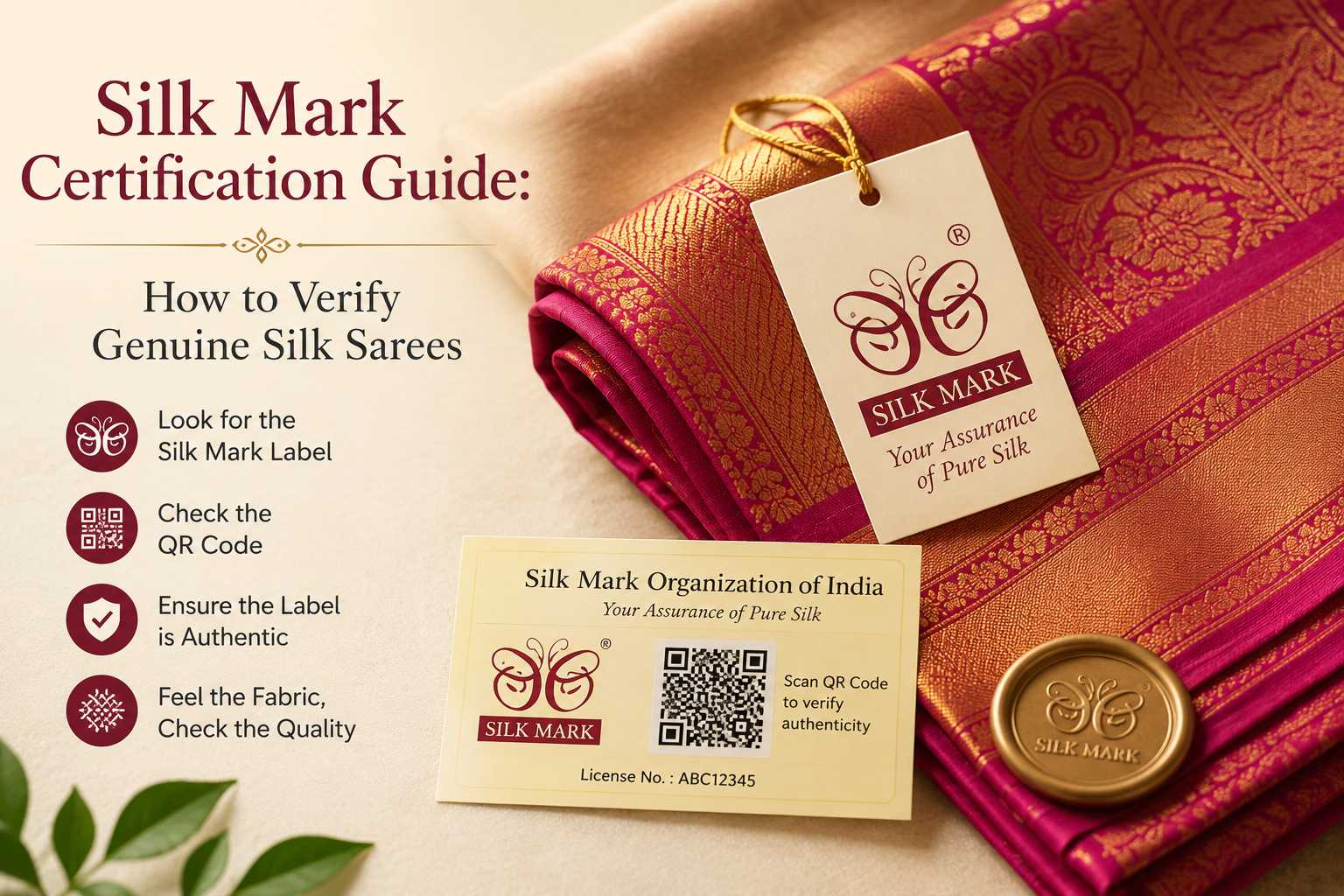
Silk Mark Certification Guide: How to Verify Genuine Silk Sarees
When investing in a silk saree, authenticity is one of the most important factors to consider. Whether you're purchasing a luxurious Kanchipuram saree, an elegant Banarasi weave, or a bridal silk masterpiece, ensuring that the saree is made from genuine silk is essential.
With the growing demand for silk sarees, the market has also seen an increase in synthetic and mixed-fabric alternatives that closely resemble pure silk. This makes it challenging for buyers to distinguish authentic silk from imitations.
This is where Silk Mark Certification becomes valuable. It serves as a trusted assurance of authenticity, helping customers purchase genuine silk products with confidence.
In this guide, we'll explain everything you need to know about Silk Mark Certification and why it matters when buying silk sarees.
What is Silk Mark Certification?
Silk Mark is an authentication label issued by the Silk Mark Organization of India (SMOI). It certifies that a product is made from genuine natural silk and meets established quality standards.
The certification was introduced to protect consumers from counterfeit products and to support India's silk industry by promoting transparency and trust.
When a saree carries a Silk Mark label, buyers can be assured that it contains authentic silk rather than synthetic substitutes.
Why Silk Mark Certification Matters
Purchasing a silk saree is often a significant investment, especially for weddings and special occasions.
Silk Mark Certification helps buyers by:
-
Verifying silk authenticity
-
Reducing the risk of counterfeit purchases
-
Ensuring product quality
-
Supporting ethical silk trade
-
Building confidence in purchasing decisions
For premium bridal and heirloom sarees, certification provides valuable peace of mind.
The Growing Need for Authenticity
Modern textile technology allows synthetic fabrics to imitate the appearance of silk remarkably well.
Without proper verification, customers may unknowingly purchase:
-
Artificial silk
-
Polyester blends
-
Mixed-fabric sarees
-
Machine-made imitations
These alternatives may look attractive initially but often lack the durability, comfort, and luxurious feel of genuine silk.
Silk Mark Certification helps eliminate uncertainty.
How Silk Mark Certification Works
Manufacturers and sellers who meet the required standards can obtain authorization to use the Silk Mark label on their products.
The certification process includes:
Quality Verification
Products undergo testing to ensure they contain genuine silk fibers.
Authorized Usage
Only approved manufacturers and retailers can use Silk Mark labels.
Consumer Protection
The certification system helps buyers verify authenticity before purchasing.
This process strengthens trust between customers and silk retailers.
Benefits of Buying Silk Mark Certified Sarees
Guaranteed Authenticity
The primary advantage is confidence that the saree contains genuine silk.
Superior Quality
Certified silk products are more likely to meet high-quality standards.
Better Durability
Pure silk generally lasts longer than synthetic alternatives when properly maintained.
Greater Value
Authentic silk sarees often retain their beauty and significance for many years.
Ideal for Bridal Purchases
Bridal sarees are often preserved as family heirlooms, making authenticity especially important.
Types of Sarees Commonly Available with Silk Mark Certification
Kanchipuram Silk Sarees
Known for:
-
Rich silk quality
-
Heavy zari work
-
Traditional craftsmanship
These sarees are among the most sought-after bridal choices.
Banarasi Silk Sarees
Famous for:
-
Intricate brocade weaving
-
Luxurious appearance
-
Timeless elegance
Certification helps verify the authenticity of these valuable sarees.
Mysore Silk Sarees
Recognized for:
-
Smooth texture
-
Lightweight elegance
-
Premium silk quality
Handloom Silk Sarees
Many authentic handwoven silk sarees also carry Silk Mark certification for added assurance.
How to Check for Silk Mark Certification
When purchasing a silk saree, follow these steps:
Look for the Silk Mark Label
Check whether the saree includes an official Silk Mark tag or label.
Verify Seller Credentials
Purchase from trusted retailers known for offering certified silk products.
Ask Questions
Before buying, inquire about:
-
Silk composition
-
Certification details
-
Fabric origin
-
Weaving process
Reputable sellers are usually transparent about these details.
Examine Documentation
Some sellers provide additional information regarding certification and product authenticity.
Silk Mark vs Synthetic Silk
Understanding the difference between genuine and artificial silk is essential.
Silk Mark Certified Silk
-
Natural silk fibers
-
Luxurious texture
-
Excellent drape
-
Long-lasting durability
-
Natural sheen
Synthetic Silk
-
Artificial fibers
-
Lower durability
-
Different texture
-
Reduced breathability
-
Less long-term value
While synthetic sarees may be more affordable, they do not offer the same qualities as genuine silk.
Common Myths About Silk Mark Certification
Myth 1: All Expensive Sarees Are Pure Silk
Price alone does not guarantee authenticity. Certification is a more reliable indicator.
Myth 2: Shiny Fabric Means Pure Silk
Many synthetic fabrics can mimic silk's appearance.
Myth 3: Only Bridal Sarees Need Certification
Certification is beneficial for all silk purchases, regardless of occasion.
Myth 4: Certification Is Unnecessary from Reputable Stores
Even trusted retailers often use Silk Mark certification as an additional layer of assurance.
Why Silk Mark Matters for Bridal Sarees
Bridal sarees are often among the most valuable garments a woman purchases.
Certified silk offers:
-
Authentic luxury
-
Long-term durability
-
Heirloom value
-
Greater confidence in quality
Many families preserve bridal silk sarees for future generations, making authenticity especially important.
Tips for Buying Genuine Silk Sarees
Buy from Trusted Sellers
Choose retailers with a strong reputation for quality and authenticity.
Check Certification
Always look for Silk Mark labeling when available.
Inspect Fabric Quality
Observe texture, weaving, and overall craftsmanship.
Understand the Product
Learn about different silk varieties before purchasing.
An informed buyer is better equipped to make a confident decision.
Conclusion
Silk Mark Certification plays an important role in helping customers identify genuine silk sarees and avoid counterfeit products. Whether you're shopping for a bridal Kanchipuram saree, an elegant Banarasi weave, or a treasured handloom silk saree, certification provides reassurance that you're investing in authentic silk.
By understanding how Silk Mark works and why it matters, buyers can make informed purchasing decisions and enjoy the timeless beauty, comfort, and value that genuine silk offers. When purchasing a silk saree, looking for Silk Mark Certification is one of the simplest and most effective ways to ensure authenticity and quality.
A genuine silk saree is more than just an outfit—it is a piece of India's rich textile heritage, worthy of being cherished for generations.