Saree Fabrics Explained: A Complete Guide to Choosing the Right Saree Fabric
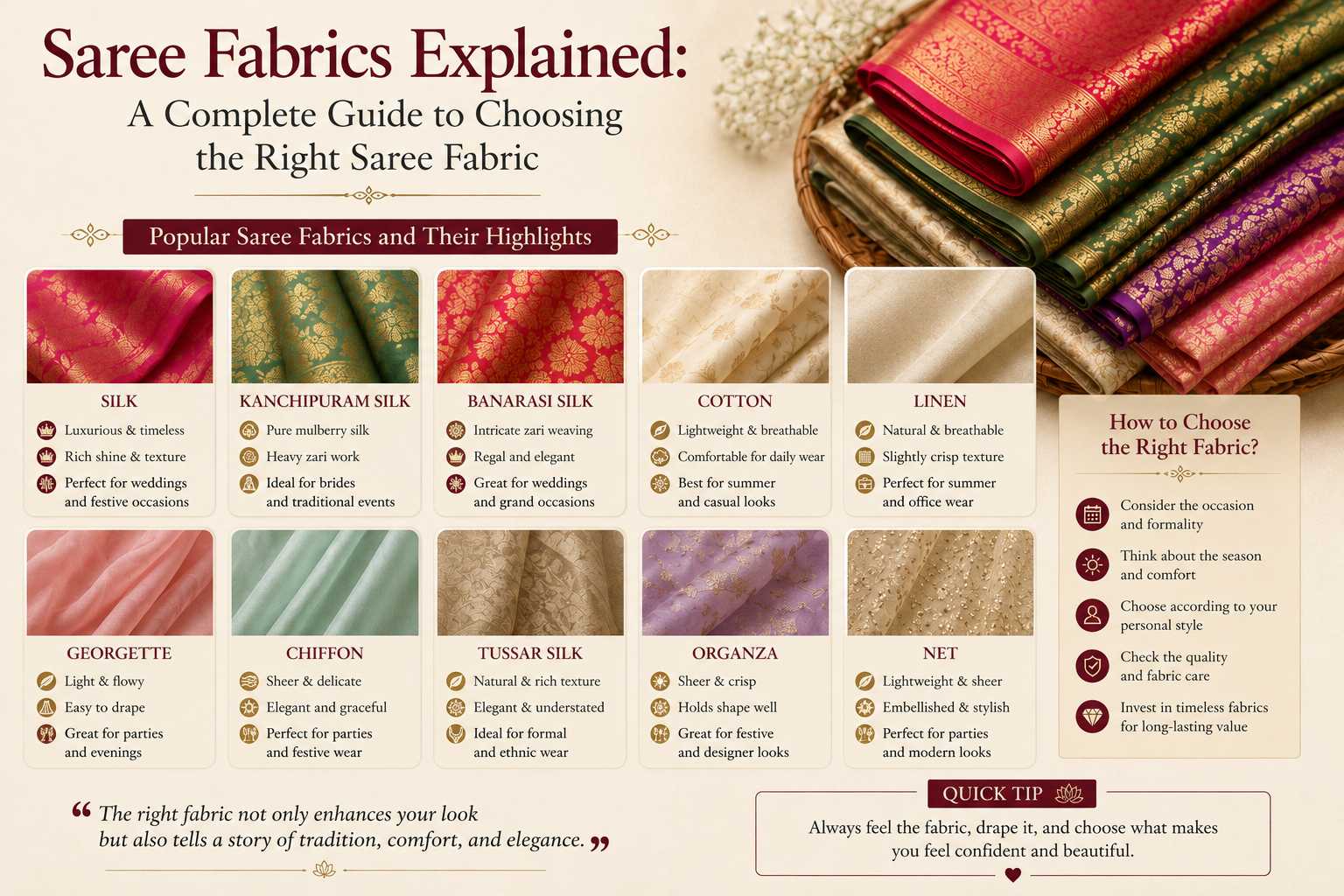
Saree Fabrics Explained: A Complete Guide to Choosing the Right Saree Fabric
A saree's beauty is not determined solely by its design or color—its fabric plays an equally important role. The fabric affects how a saree drapes, feels, looks, and performs in different weather conditions and occasions. Whether you're shopping for a bridal silk saree, a lightweight office saree, or a stylish party outfit, understanding saree fabrics can help you make the right choice.
India offers an incredible variety of saree fabrics, each with unique characteristics and cultural significance. This guide explains the most popular saree fabrics and helps you choose the perfect one for every occasion.
Why Saree Fabric Matters
The fabric of a saree influences:
-
Comfort and breathability
-
Drape and appearance
-
Durability
-
Maintenance requirements
-
Suitability for different occasions
-
Seasonal comfort
Selecting the right fabric ensures both elegance and practicality.
1. Silk Sarees
Silk is one of the most luxurious and traditional saree fabrics in India. Known for its rich texture and natural sheen, silk remains a top choice for weddings and festive occasions.
Features
-
Luxurious appearance
-
Rich texture
-
Natural shine
-
Excellent durability
Best For
-
Weddings
-
Bridal wear
-
Festivals
-
Religious ceremonies
Popular varieties include Kanchipuram Silk, Banarasi Silk, Mysore Silk, and Tussar Silk.
2. Cotton Sarees
Cotton sarees are loved for their comfort and breathability. They are ideal for everyday wear and warm climates.
Features
-
Lightweight
-
Breathable
-
Comfortable
-
Easy to maintain
Best For
-
Office wear
-
Daily use
-
Summer events
-
Casual gatherings
Cotton sarees combine elegance with practicality.
3. Chiffon Sarees
Chiffon is a lightweight and flowy fabric that creates a graceful silhouette.
Features
-
Soft drape
-
Lightweight feel
-
Elegant movement
-
Feminine appearance
Best For
-
Parties
-
Evening events
-
Casual celebrations
Chiffon sarees are easy to carry and highly versatile.
4. Georgette Sarees
Georgette sarees are known for their slightly textured surface and flowing drape.
Features
-
Lightweight
-
Wrinkle-resistant
-
Comfortable
-
Modern appearance
Best For
-
Office functions
-
Social gatherings
-
Contemporary styling
They are particularly popular among younger women for their ease of wear.
5. Organza Sarees
Organza has become one of the most fashionable saree fabrics in recent years.
Features
-
Lightweight structure
-
Crisp texture
-
Elegant transparency
-
Modern appeal
Best For
-
Receptions
-
Engagement ceremonies
-
Fashion events
Organza sarees often feature floral embroidery and contemporary designs.
6. Linen Sarees
Linen sarees offer a sophisticated blend of comfort and style.
Features
-
Breathable fabric
-
Natural texture
-
Elegant appearance
-
Durable material
Best For
-
Office wear
-
Formal events
-
Everyday elegance
Linen sarees are increasingly popular among professionals.
7. Tissue Silk Sarees
Tissue silk sarees are admired for their luminous finish and luxurious look.
Features
-
Glossy appearance
-
Lightweight feel
-
Rich texture
-
Excellent drape
Best For
-
Weddings
-
Receptions
-
Grand celebrations
These sarees create a glamorous and festive appearance.
8. Tussar Silk Sarees
Tussar silk is known for its natural texture and earthy elegance.
Features
-
Natural golden sheen
-
Unique texture
-
Lightweight comfort
-
Artistic appeal
Best For
-
Festivals
-
Cultural events
-
Elegant daytime functions
Tussar sarees offer a refined and sophisticated look.
9. Crepe Sarees
Crepe fabric creates a smooth and flattering drape.
Features
-
Soft texture
-
Lightweight
-
Wrinkle resistance
-
Comfortable wear
Best For
-
Office events
-
Parties
-
Formal gatherings
Crepe sarees are easy to manage and style.
10. Velvet Sarees
Velvet sarees are associated with luxury and grandeur.
Features
-
Rich texture
-
Warm fabric
-
Premium appearance
-
Distinctive elegance
Best For
-
Winter weddings
-
Receptions
-
Evening celebrations
Velvet sarees make a bold and sophisticated fashion statement.
Choosing Saree Fabric Based on Occasion
Weddings
Recommended fabrics:
-
Silk
-
Banarasi Silk
-
Kanchipuram Silk
-
Tissue Silk
These fabrics create a luxurious bridal and festive look.
Office Wear
Best options:
-
Cotton
-
Linen
-
Lightweight Georgette
They provide comfort during long working hours.
Festivals
Suitable fabrics:
-
Silk
-
Tussar Silk
-
Cotton
-
Chanderi
These fabrics balance tradition and elegance.
Parties and Receptions
Popular choices:
-
Organza
-
Chiffon
-
Georgette
-
Velvet
These fabrics create a stylish and contemporary appearance.
Choosing Saree Fabric Based on Weather
Summer
Ideal fabrics:
-
Cotton
-
Linen
-
Lightweight Chiffon
These materials offer excellent breathability.
Monsoon
Recommended fabrics:
-
Georgette
-
Chiffon
-
Crepe
These fabrics dry quickly and remain comfortable.
Winter
Best choices:
-
Silk
-
Velvet
-
Heavier Banarasi Weaves
These fabrics provide warmth and elegance.
Fabric Care Tips
Different fabrics require different levels of care.
Silk Sarees
-
Dry clean when necessary
-
Store in cotton cloth
-
Avoid direct sunlight
Cotton Sarees
-
Gentle washing
-
Light starch if preferred
-
Store in a dry place
Organza and Chiffon Sarees
-
Handle carefully
-
Avoid sharp accessories
-
Use professional cleaning when required
Proper maintenance helps preserve fabric quality and longevity.
Conclusion
Understanding saree fabrics is essential for making informed purchasing decisions. From the luxurious elegance of silk and tissue fabrics to the everyday comfort of cotton and linen, each material offers unique advantages.
When selecting a saree, consider the occasion, climate, comfort level, and maintenance requirements. Choosing the right fabric ensures that your saree not only looks beautiful but also feels comfortable and remains a cherished part of your wardrobe for years to come.
A well-chosen fabric enhances the beauty of any saree and allows you to celebrate both tradition and personal style with confidence.