Pure Zari vs Artificial Zari: Understanding the Difference Before Buying a Silk Saree
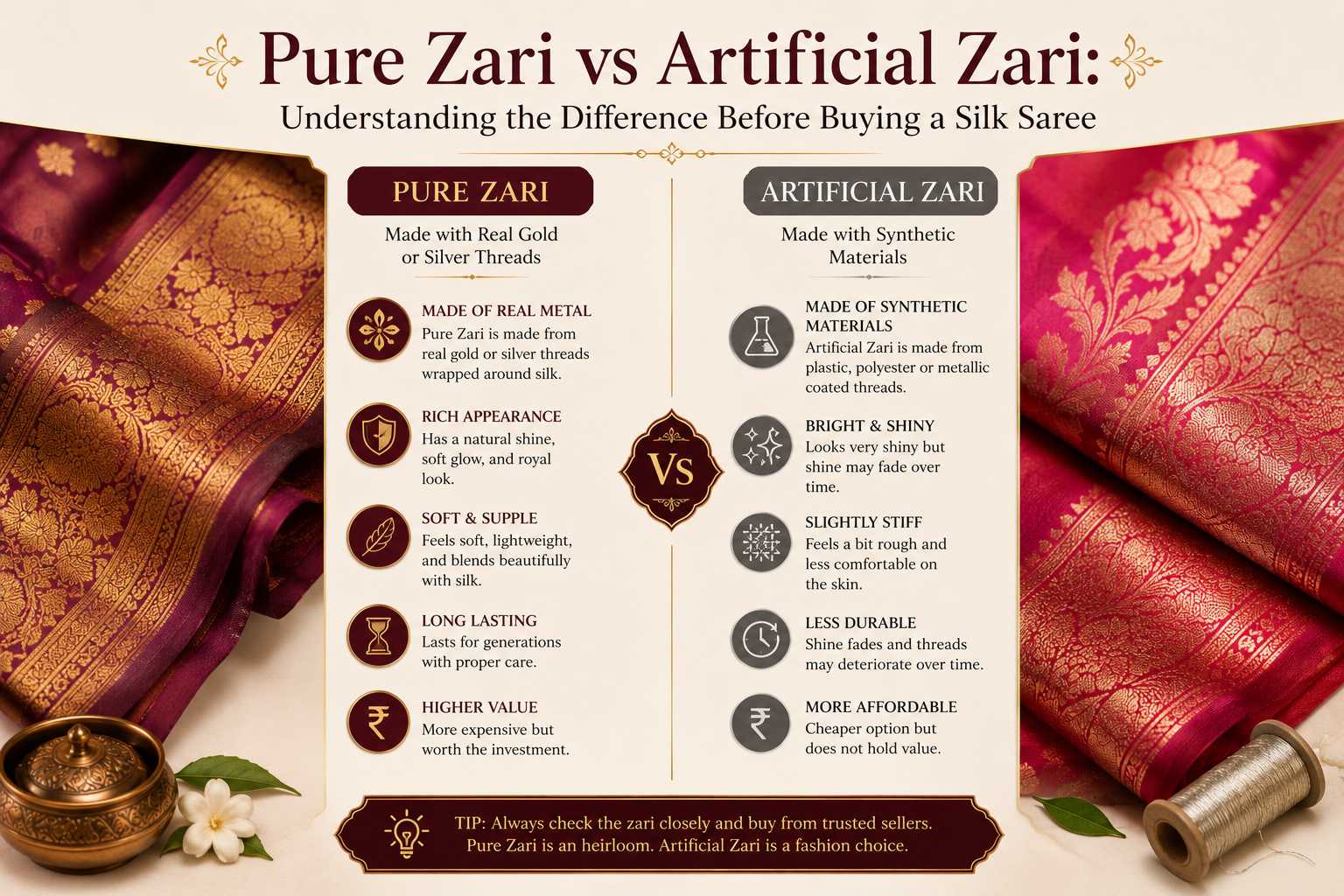
Pure Zari vs Artificial Zari: Understanding the Difference Before Buying a Silk Saree
When purchasing a silk saree, especially for weddings and special occasions, one of the most important factors to consider is the quality of the zari. Zari is the metallic thread woven into sarees to create intricate patterns, borders, and decorative motifs. The type of zari used significantly affects the saree's appearance, durability, value, and price.
Understanding the difference between pure zari and artificial zari can help you make an informed investment and choose a saree that meets your expectations. In this guide, we explore the key differences between the two.
What is Zari?
Zari is a metallic thread traditionally made using precious metals such as silver and gold. It is woven into silk fabrics to create luxurious patterns and decorative designs. Zari work has been an essential part of Indian textile heritage for centuries and is particularly associated with premium silk sarees.
Today, zari is available in different forms, including pure zari and artificial zari.
What is Pure Zari?
Pure zari is made using genuine silver threads that are coated with gold. Traditionally, a silk thread is wrapped with fine silver wire and then plated with gold to create authentic zari.
Characteristics of Pure Zari
- Made with real silver and gold plating
- Rich and elegant appearance
- Superior durability
- Long-lasting shine
- High resale and heirloom value
- Commonly found in premium silk sarees
Pure zari is widely used in high-end bridal and ceremonial sarees due to its luxurious finish and lasting quality.
What is Artificial Zari?
Artificial zari, also known as imitation zari or tested zari, is manufactured using synthetic materials or metallic-coated copper and polyester threads. It is designed to resemble pure zari while being more affordable.
Characteristics of Artificial Zari
- Made from synthetic or non-precious materials
- More economical than pure zari
- Attractive appearance when new
- Suitable for occasional wear
- Available in a wide range of designs
- Lower durability compared to pure zari
Artificial zari has become popular because it offers the look of traditional zari at a budget-friendly price.
Pure Zari vs Artificial Zari: Key Differences
1. Material Composition
Pure Zari
- Silver thread coated with gold
- Traditional manufacturing process
- Premium materials
Artificial Zari
- Copper, polyester, or synthetic metallic yarns
- Machine-produced alternatives
- Cost-effective materials
2. Appearance
Pure zari has a subtle, rich glow that looks sophisticated and luxurious. The shine remains elegant over time.
Artificial zari often appears brighter initially but may lose its luster after prolonged use or washing.
3. Durability
Pure zari is highly durable and can last for decades when properly maintained. Many heirloom silk sarees retain their beauty across generations.
Artificial zari is less durable and may tarnish, fade, or wear out more quickly.
4. Price
Pure zari significantly increases the cost of a saree because it contains precious metals and involves skilled craftsmanship.
Artificial zari is more affordable, making it accessible for everyday and occasional wear.
5. Investment Value
Pure zari sarees often retain their value and can become treasured family heirlooms.
Artificial zari sarees generally do not have the same long-term value or collectability.
How to Identify Pure Zari
When purchasing a silk saree, consider these tips:
Check Authenticity Certificates
Reputable sellers often provide authenticity certifications for pure silk and pure zari sarees.
Examine the Shine
Pure zari usually has a refined, soft glow rather than an overly bright metallic appearance.
Verify the Source
Trusted silk saree retailers and established weaving centers are more likely to offer authentic zari products.
Ask About Zari Type
Always inquire whether the saree contains:
- Pure zari
- Silver zari
- Tested zari
- Artificial zari
A reliable seller will clearly explain the materials used.
Which Zari Should You Choose?
Choose Pure Zari If:
- You are buying a bridal saree
- You want a family heirloom
- You value traditional craftsmanship
- You seek long-term durability
- You prefer premium quality
Choose Artificial Zari If:
- You have a limited budget
- You need a saree for occasional use
- You want fashionable designs at a lower cost
- You prioritize affordability over long-term value
Caring for Zari Sarees
Regardless of the zari type, proper care is essential.
Care Tips
- Store sarees in a cool, dry place
- Wrap them in soft cotton cloth
- Avoid direct sunlight
- Refold periodically to prevent permanent creases
- Use professional dry cleaning when necessary
Proper maintenance helps preserve both the silk fabric and zari work.
Conclusion
Both pure zari and artificial zari have their own advantages. Pure zari offers unmatched elegance, durability, and heritage value, making it ideal for bridal and heirloom sarees. Artificial zari provides a cost-effective alternative that delivers beautiful designs at an affordable price.
By understanding the differences between pure zari and artificial zari, you can confidently choose a silk saree that suits your budget, occasion, and long-term expectations. Whether you prefer the timeless luxury of pure zari or the practicality of artificial zari, selecting quality craftsmanship will ensure your saree remains a cherished part of your wardrobe for years to come.