Heirloom Sarees: How to Preserve Silk Sarees for Generations
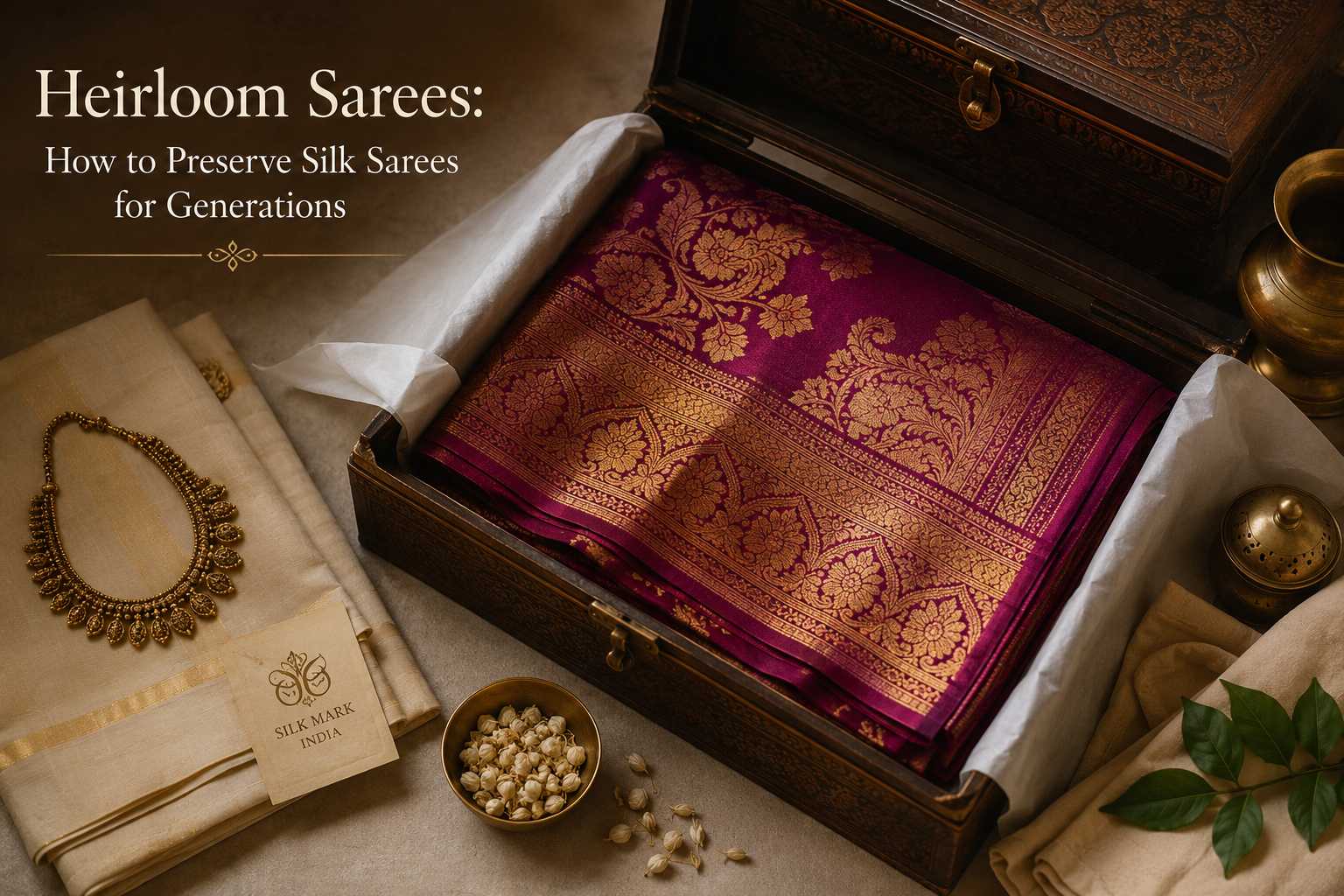
Heirloom Sarees: Preserving Silk Sarees for Generations
A silk saree is more than a beautiful garment—it is a symbol of tradition, heritage, and cherished memories. Many families treasure bridal silk sarees, wedding gifts, and handwoven masterpieces as heirlooms that are passed down from one generation to the next. These sarees often carry emotional value, representing important milestones, family traditions, and cultural heritage.
Whether it's a Kanchipuram silk saree worn by a grandmother, a Banarasi bridal saree passed down from a mother, or a treasured handloom weave collected over decades, proper preservation is essential to maintain its beauty and longevity.
This guide explores the best practices for preserving heirloom silk sarees so they can continue to be cherished for generations.
What Are Heirloom Sarees?
Heirloom sarees are special sarees that hold sentimental, cultural, or historical value within a family. They are often passed down through generations and become treasured possessions.
Common heirloom sarees include:
-
Bridal silk sarees
-
Wedding reception sarees
-
Traditional Kanchipuram sarees
-
Banarasi silk sarees
-
Handwoven heritage sarees
-
Sarees received as family gifts
Unlike ordinary garments, heirloom sarees represent family stories and lasting memories.
Why Silk Sarees Make Perfect Heirlooms
Silk sarees are known for their durability, elegance, and timeless appeal.
Reasons They Become Heirlooms
-
Exceptional craftsmanship
-
Long-lasting quality
-
Cultural significance
-
Traditional weaving techniques
-
Emotional value
A well-preserved silk saree can remain beautiful for decades and sometimes even centuries.
The Importance of Proper Preservation
Silk is a natural fiber that requires careful handling. Without proper care, silk sarees may suffer from:
-
Fabric weakening
-
Color fading
-
Moisture damage
-
Staining
-
Zari deterioration
-
Permanent creases
Preservation helps maintain both the appearance and value of heirloom sarees.
1. Clean Before Storage
Before storing a silk saree for an extended period, ensure it is clean.
Why It Matters
Invisible stains from sweat, perfume, or food particles can damage silk fibers over time.
Recommended Practice
-
Dry clean the saree before long-term storage.
-
Ensure it is completely dry before folding and storing.
Proper cleaning prevents deterioration and discoloration.
2. Use Cotton or Muslin Cloth
One of the most effective ways to preserve silk sarees is by wrapping them in breathable fabric.
Best Options
-
Cotton cloth
-
Muslin cloth
Avoid
-
Plastic covers
-
Airtight bags
Natural fabrics allow airflow and help prevent moisture buildup.
3. Store in a Cool and Dry Place
Environmental conditions play a significant role in saree preservation.
Ideal Storage Conditions
-
Cool temperature
-
Low humidity
-
Good ventilation
-
Minimal exposure to sunlight
Avoid storing sarees in damp areas that may encourage mold or mildew.
4. Refold Sarees Regularly
Keeping a silk saree folded in the same position for years can weaken the fibers along the fold lines.
Recommended Frequency
Refold heirloom sarees every three to six months.
Benefits
-
Prevents permanent creases
-
Reduces fabric stress
-
Preserves zari work
This simple habit significantly extends the life of a saree.
5. Protect Zari Work
Many heirloom sarees feature intricate gold or silver zari.
Preservation Tips
-
Keep zari sections covered with soft fabric.
-
Avoid direct contact between zari and moisture.
-
Store zari portions carefully to reduce friction.
Proper protection helps maintain the brilliance of metallic threads.
6. Avoid Direct Sunlight
While occasional airing is beneficial, prolonged exposure to sunlight can damage silk.
Potential Problems
-
Color fading
-
Fabric weakening
-
Reduced sheen
Always dry or air sarees in shaded areas.
7. Air Sarees Periodically
Silk sarees benefit from occasional airing.
Best Practice
-
Remove sarees from storage every few months.
-
Air them in a shaded, well-ventilated area.
This helps eliminate trapped moisture and keeps fabrics fresh.
8. Handle with Clean Hands
Natural oils and dirt from hands can affect silk fabrics over time.
Before Handling
-
Wash and dry hands thoroughly.
-
Avoid lotions or oily products.
Gentle handling helps maintain fabric quality.
9. Store Valuable Sarees Separately
Particularly valuable heirloom sarees should be stored individually.
Advantages
-
Reduces friction
-
Protects delicate embroidery
-
Prevents snagging
Separate storage is especially important for heavily embellished sarees.
10. Preserve Documentation
For premium silk sarees, retain any accompanying documentation.
Examples include:
-
Purchase receipts
-
Silk Mark certifications
-
Authenticity certificates
-
Family records
These documents can enhance both sentimental and monetary value.
Caring for Bridal Heirloom Sarees
Bridal silk sarees often hold exceptional emotional significance.
Special Considerations
-
Clean immediately after use
-
Store carefully in breathable fabric
-
Protect heavy zari sections
-
Inspect periodically
A bridal saree preserved properly can become a cherished family treasure.
Common Mistakes to Avoid
Using Plastic Covers
Plastic traps moisture and restricts airflow.
Ignoring Refolding
Long-term folds can weaken silk fibers.
Storing in Humid Areas
Humidity encourages mold growth and fabric damage.
Overcrowding Storage Space
Crowded storage can cause wrinkles and damage embellishments.
Delaying Cleaning
Even minor stains can become permanent if left untreated.
Avoiding these mistakes helps protect heirloom sarees for decades.
Passing Sarees Through Generations
Heirloom sarees often become part of family traditions.
Passing a treasured saree to daughters, granddaughters, or future generations allows family stories and cultural heritage to continue. These sarees often become symbols of love, celebration, and continuity.
The value of an heirloom saree is not measured solely by its fabric or craftsmanship but also by the memories it carries.
Why Preservation Is an Investment
Proper preservation offers several benefits:
-
Extends saree lifespan
-
Maintains fabric quality
-
Protects zari work
-
Preserves sentimental value
-
Supports family traditions
A small amount of care today can ensure a saree remains beautiful for generations.
Conclusion
Heirloom silk sarees are timeless treasures that connect families across generations. Whether it is a bridal Kanchipuram silk saree, a regal Banarasi weave, or a cherished handloom masterpiece, preserving these garments helps protect both their beauty and their stories.
By following proper storage, cleaning, and maintenance practices, you can ensure that your treasured silk sarees continue to shine for decades to come. These heirlooms are more than garments—they are living pieces of family history, woven with tradition, craftsmanship, and memories that deserve to be preserved and celebrated for generations.