Handloom Saree Guide: Everything You Need to Know About Handwoven Elegance
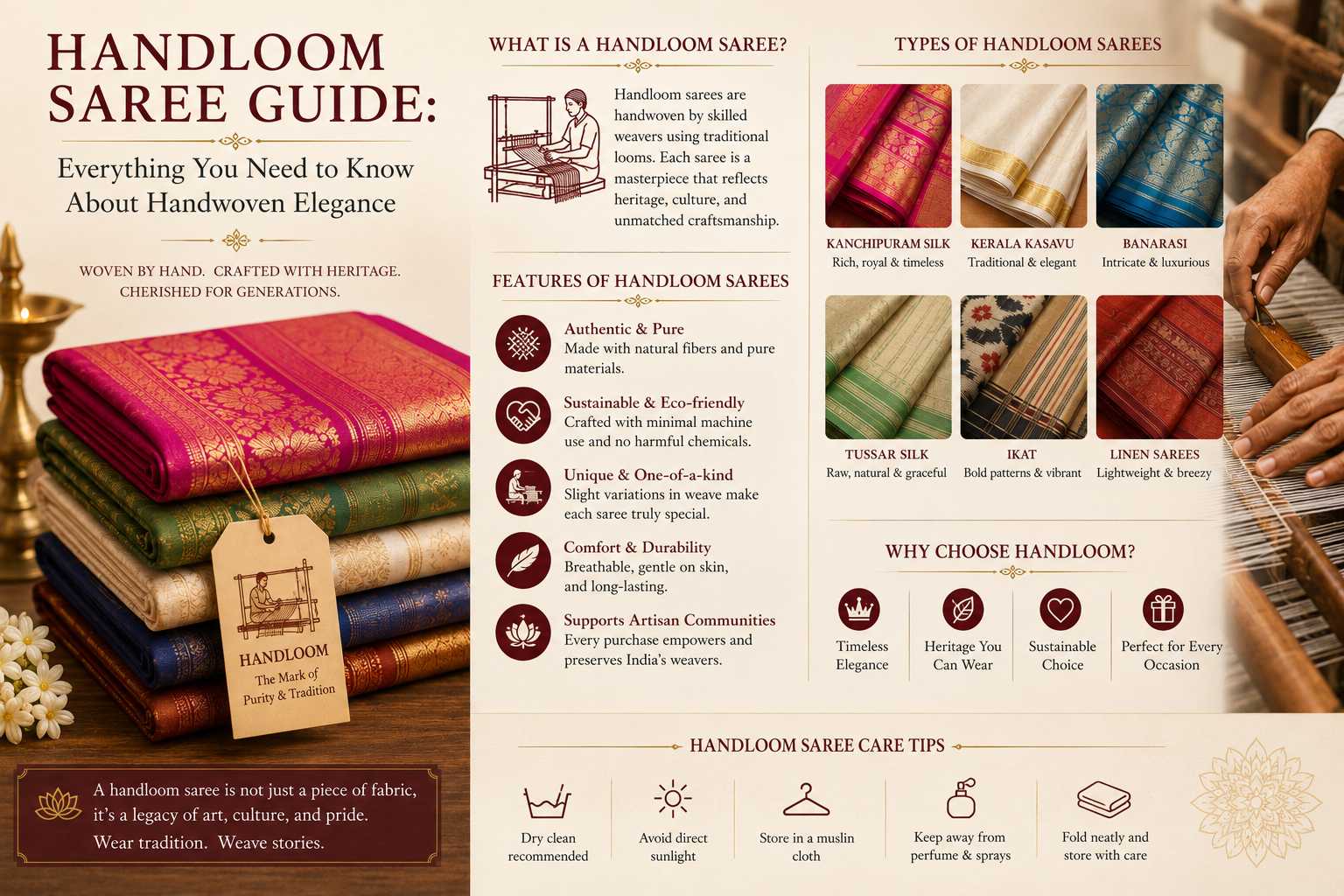
Handloom Saree Guide: Everything You Need to Know About Handwoven Elegance
Handloom sarees are a celebration of India's rich textile heritage, skilled craftsmanship, and timeless beauty. Woven by artisans using traditional looms, these sarees reflect generations of expertise and cultural traditions. Unlike mass-produced fabrics, every handloom saree carries a unique story, making it a cherished addition to any wardrobe.
Whether you're looking for a saree for daily wear, festivals, weddings, or special occasions, understanding handloom sarees can help you appreciate their value and choose the perfect piece. This comprehensive guide explores the history, types, benefits, and buying tips for handloom sarees.
What is a Handloom Saree?
A handloom saree is woven manually on a loom without the use of automated machinery. Skilled artisans interlace warp and weft threads by hand, creating intricate patterns, textures, and designs that are difficult to replicate using power looms.
Each saree is a result of patience, precision, and artistic expertise, often taking days or even weeks to complete depending on the complexity of the design.
Why Handloom Sarees Are Special
Handloom sarees stand apart because of their craftsmanship and individuality.
Key Features
-
Handwoven by skilled artisans
-
Unique designs and textures
-
Superior craftsmanship
-
Eco-friendly production
-
Comfortable and breathable fabrics
-
Rich cultural significance
No two handloom sarees are exactly alike, making each piece truly unique.
History of Handloom Weaving in India
India has a weaving tradition that dates back thousands of years. Different regions developed distinctive weaving styles influenced by local culture, climate, and traditions.
Over centuries, handloom weaving evolved into a major part of India's artistic and economic heritage. Today, handloom sarees continue to preserve ancient techniques while supporting artisan communities across the country.
Popular Types of Handloom Sarees
1. Kanchipuram Handloom Sarees
Originating from Tamil Nadu, Kanchipuram sarees are among India's most prestigious silk handloom sarees.
Features:
-
Rich silk fabric
-
Traditional motifs
-
Intricate zari work
-
Exceptional durability
These sarees are widely chosen for weddings and special occasions.
2. Banarasi Handloom Sarees
Handwoven in Varanasi, Banarasi sarees are known for their luxurious brocade weaving and elegant zari designs.
Features:
-
Fine silk weaving
-
Floral and Mughal-inspired motifs
-
Luxurious appearance
Banarasi sarees are highly sought after for bridal wear.
3. Chanderi Handloom Sarees
Chanderi sarees from Madhya Pradesh combine elegance with comfort.
Features:
-
Lightweight texture
-
Sheer fabric
-
Delicate motifs
These sarees are perfect for festive and formal occasions.
4. Tussar Handloom Sarees
Tussar silk sarees are appreciated for their natural texture and earthy appeal.
Features:
-
Golden sheen
-
Lightweight feel
-
Unique texture
They are ideal for women who appreciate understated elegance.
5. Linen Handloom Sarees
Linen handloom sarees have gained popularity for their contemporary appearance and comfort.
Features:
-
Breathable fabric
-
Minimalist designs
-
Suitable for office wear
They offer a stylish blend of tradition and modernity.
6. Cotton Handloom Sarees
Cotton handloom sarees are among the most comfortable traditional garments available.
Features:
-
Lightweight
-
Breathable
-
Easy maintenance
-
Ideal for everyday wear
They are especially popular in warmer climates.
Benefits of Choosing Handloom Sarees
Superior Craftsmanship
Every handloom saree showcases the dedication and expertise of skilled artisans.
Sustainable Fashion
Handloom weaving consumes significantly less energy compared to machine-based production.
Supports Artisan Communities
Purchasing handloom sarees directly contributes to preserving traditional crafts and supporting weaving families.
Long-Lasting Quality
Well-maintained handloom sarees can last for decades and often become treasured heirlooms.
Unique Designs
The handmade nature of these sarees ensures individuality and exclusivity.
How to Identify an Authentic Handloom Saree
With growing demand, it's important to distinguish genuine handloom sarees from machine-made alternatives.
Look for Minor Variations
Small irregularities in weaving often indicate authentic hand craftsmanship.
Examine the Reverse Side
Handwoven patterns are usually visible on both sides of the saree.
Check Texture and Finish
Authentic handloom sarees often have a distinctive texture and natural feel.
Buy from Trusted Sources
Choose reputable handloom stores, artisan cooperatives, and established retailers.
Verify Certifications
Look for recognized handloom certification labels whenever available.
How to Choose the Right Handloom Saree
Consider the Occasion
-
Weddings: Silk handloom sarees
-
Festivals: Traditional zari handlooms
-
Office wear: Cotton or linen handlooms
-
Casual outings: Lightweight cotton weaves
Select Appropriate Colors
Choose colors that complement your skin tone and match the occasion.
Check Fabric Weight
Heavier silk sarees suit grand occasions, while lighter fabrics provide everyday comfort.
Evaluate Craftsmanship
Inspect weaving quality, borders, motifs, and finishing details before purchasing.
Styling Handloom Sarees
Traditional Styling
Pair with:
-
Gold jewelry
-
Temple jewelry
-
Traditional hairstyles
Contemporary Styling
Modern options include:
-
Statement earrings
-
Designer blouses
-
Belted saree styling
-
Minimal accessories
Handloom sarees adapt beautifully to both classic and modern fashion preferences.
Caring for Handloom Sarees
Proper maintenance helps preserve the beauty and longevity of handwoven sarees.
Care Tips
-
Store in cotton or muslin cloth
-
Avoid prolonged exposure to sunlight
-
Refold periodically
-
Dry clean silk handloom sarees when needed
-
Keep sarees in a cool, dry environment
Good care ensures your saree remains beautiful for years.
Why Handloom Sarees Are an Investment
Unlike fast-fashion garments, handloom sarees carry artistic, cultural, and emotional value. Many families preserve these sarees for generations, passing them down as heirlooms.
Their timeless appeal, durability, and craftsmanship make them a worthwhile investment for anyone who appreciates authentic textile traditions.
Conclusion
Handloom sarees represent the perfect blend of heritage, artistry, and sustainability. From luxurious Kanchipuram silks and elegant Banarasi weaves to breathable cotton and contemporary linen sarees, handloom textiles offer something for every occasion and personal style.
By choosing authentic handloom sarees, you not only own a beautiful garment but also support centuries-old weaving traditions and skilled artisan communities. Whether you're building a saree collection or searching for a special occasion outfit, a handloom saree is a timeless choice that celebrates India's rich cultural legacy.